Candor Health Education
  • SCHOOLS
    • School Programs
      • Program Delivery Options
        • In-Person Delivery
        • Virtual Delivery
      • Program Menu
      • Schedule Program
      • Program Fees
    • FAQs for Parents
    • LMS Support
  • PARENTS
    • FAQs About Our Programs
    • Resources to Help Discussions
      • Puberty & Sex Education
      • Substance Abuse Prevention Education
      • Social Media and Technology Use
      • Social Emotional Health Resources
  • EDUCATION RESOURCES
    • Substance Abuse Prevention Portal
    • Sex & Technology Portal
    • Puberty Student FAQs
  • ABOUT
    • Mission & History
      • Annual Reports
    • Our Board
    • Our Team
    • News
      • School Newsletters
      • Community Newsletters
    • Careers
  • SUPPORT US
    • Why Support Us?
    • Upcoming Events
    • Donate
  • SCHOOLS
    • School Programs
      • Program Delivery Options
        • In-Person Delivery
        • Virtual Delivery
      • Program Menu
      • Schedule Program
      • Program Fees
    • FAQs for Parents
    • LMS Support
  • PARENTS
    • FAQs About Our Programs
    • Resources to Help Discussions
      • Puberty & Sex Education
      • Substance Abuse Prevention Education
      • Social Media and Technology Use
      • Social Emotional Health Resources
  • EDUCATION RESOURCES
    • Substance Abuse Prevention Portal
    • Sex & Technology Portal
    • Puberty Student FAQs
  • ABOUT
    • Mission & History
      • Annual Reports
    • Our Board
    • Our Team
    • News
      • School Newsletters
      • Community Newsletters
    • Careers
  • SUPPORT US
    • Why Support Us?
    • Upcoming Events
    • Donate
Candor Health Education > News > Winter Blues
October 14, 2019  |  By RCC In News

Winter Blues

Written by: Lance Williams, Health Education Manager, Candor Health Education

When you’re in puberty, can winter affect your emotions too? It’s an interesting question asked by a 5th grader in one of my recent puberty education classes. The answer is “yes”, but as many of you know, it’s not just during puberty that winter can affect our overall emotional well-being. While I was being asked this question, I subtly began to smile realizing that my favorite season is nearing its return and I could not be happier (yes, I am one of those people who actually enjoys winter).  I also realized that soon I will undoubtedly find myself listening to family and friends mourning the loss of summer as they prepare for the snowy roads, cold weather and shorter days.

Although it is my favorite season, I realize that winter can truly bring obstacles into people’s lives.  Some of us may get into a funk and experience the “winter blues”.  Seasonal Depression is something that affects millions of people and is defined by the National Institute of Mental Health (NIH) as a type of depression that comes and goes with the seasons, typically starting in late fall and early winter and going away during the spring and summer. The biggest question, though, is how do we manage Seasonal Depression? Unfortunately, some may rely on some “unhealthy” antidotes like self-medicating in the hopes of “feeling normal” again.
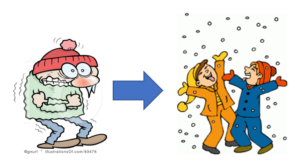
While the specific causes of Seasonal Depression are unknown, the National Institute of Mental Health highlights some factors related to sunlight that may have a connection.  Decrease in sunlight may lower levels of serotonin, disrupt the body’s circadian rhythm (body’s internal sleep clock) and lower melatonin levels which can all trigger the feelings of depression.

A few of the potential signs and symptoms may be:

  • Having low energy
  • Hypersomnia (extreme sleepiness)
  • Overeating
  • Weight gain
  • Craving for carbohydrates
  • Social withdrawal
  • Feeling depressed nearly every day

If you (or anyone you know) find yourself experiencing the “winter blues” these winter months here are some “healthy” antidotes recommended by Jeanne Segal, Ph.D.

  • Get as much natural sunlight as possible
  • Exercise regularly
  • Meditation
  • Reach out to family and friends
  • Eat the right diet
  • Take steps to deal with stress

Implementing these “healthy” antidotes as a regular self-care practice can be helpful, whether you experience the “winter blues” or not.  But for some these seasonal emotional changes can be extreme, so if anyone near to you is experiencing more than just the common “blahs”, please take it very seriously and seek professional care.


PreviousDifferent Viewpoints: Sex Positive Sexuality Education-What It Is and Isn’t
NextIs History Repeating Itself?

RECENT ARTICLES

  • High-Potency THC and its Impact on the Developing Brain
  • Cheers to 50 Years!
  • From 1977-2024: A lifetime of Candor Health Education programs
  • 14 Years at Candor: CEO, Barb Thayer’s Story
  • Noxious Nos: Trending Recreational Use of Nitrous Oxide By Young People
  • Creating Media Literate Teens
  • Back to School Means… Resetting Sleep Schedules!
  • Louie’s Law – What it Means for Drug Education in Illinois Schools
  • May – The Month that Sex Education is Highlighted and Celebrated!
  • The Period Poverty Problem

Contact Details

Looking for a way to contact
Candor Health Education?

15 Spinning Wheel Road, Suite 410, Hinsdale, IL 60521
630.325.1900
info@candorhealthed.org

Follow us

  • facebook
  • twitter
  • instagram
  • linkedin
  • pinterest

Contact Text

Questions?

Please send an email with any questions to: info@candorhealthed.org. Thank you.

About Us?

Located in Hinsdale, Illinois, the Candor Health Education is a 501c3 nonprofit organization. Our goal is to motivate and educate young people to lead healthy, happy and safe lives.