
Candor Health Education
  • SCHOOLS
    • School Programs
      • Program Delivery Options
        • In-Person Delivery
        • Virtual Delivery
      • Program Menu
      • Schedule Program
      • Program Fees
    • FAQs for Parents
    • LMS Support
  • PARENTS
    • FAQs About Our Programs
    • Resources to Help Discussions
      • Puberty & Sex Education
      • Substance Abuse Prevention Education
      • Social Media and Technology Use
      • Social Emotional Health Resources
  • EDUCATION RESOURCES
    • Substance Abuse Prevention Portal
    • Sex & Technology Portal
    • Puberty Student FAQs
  • ABOUT
    • Mission & History
      • Annual Reports
    • Our Board
    • Our Team
    • News
      • School Newsletters
      • Community Newsletters
    • Careers
  • SUPPORT US
    • Why Support Us?
    • Upcoming Events
    • Donate
  • SCHOOLS
    • School Programs
      • Program Delivery Options
        • In-Person Delivery
        • Virtual Delivery
      • Program Menu
      • Schedule Program
      • Program Fees
    • FAQs for Parents
    • LMS Support
  • PARENTS
    • FAQs About Our Programs
    • Resources to Help Discussions
      • Puberty & Sex Education
      • Substance Abuse Prevention Education
      • Social Media and Technology Use
      • Social Emotional Health Resources
  • EDUCATION RESOURCES
    • Substance Abuse Prevention Portal
    • Sex & Technology Portal
    • Puberty Student FAQs
  • ABOUT
    • Mission & History
      • Annual Reports
    • Our Board
    • Our Team
    • News
      • School Newsletters
      • Community Newsletters
    • Careers
  • SUPPORT US
    • Why Support Us?
    • Upcoming Events
    • Donate
Candor Health Education > News > Relationship Education: Necessary in a Murky World
February 12, 2019  |  By RCC In News

Relationship Education: Necessary in a Murky World

Written by: Edith Lule-Education Manager, Candor Health Education

February is Teen Dating Violence Awareness and Prevention Month. According to BreaktheCycle.org, one in three high school students will experience physical or sexual violence, or both, by someone they are dating. It’s hard to imagine that this could be the reality for some teenagers, but statistics like this highlight the need to educate young people on healthy relationships – what does it mean to be in a healthy relationship and maybe more importantly, what does it mean to be in an unhealthy relationship?

Historically, relationships are classified as either healthy or unhealthy, but LoveisRespect.org broadens their relationship spectrum to include “abusive”. Healthy relationships are defined as relationships that are based on equality and respect. Each person has their fair say and is independent outside of the relationship. Unhealthy relationships are those based on attempts to control the other person. They may try to make most of the decisions and display other inconsiderate behavior. But this new category, “abusive” relationships, are those in which one person has assumed all the power and control within the relationship.
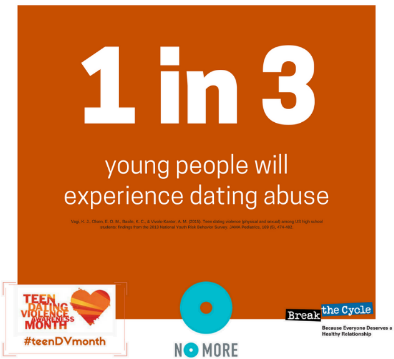
One in ten high school students has been purposefully hit, slapped, or physically hurt by a boyfriend or girlfriend. However, there are other forms of abuse aside from physical: sexual, emotional/verbal, financial, stalking, and digital. These other forms of abuse are the ones that are concerning, because they may be murky, or not as clear, for someone to confidently categorize as abusive behavior. “What’s unhealthy in one relationship may be abusive in another.” BreaktheCycle.org lists the following as common warning signs of dating abuse:

  • Checking cell phones or social networks without permission
  • Extreme jealousy
  • Constant put-downs
  • Explosive temper
  • Isolation from friends
  • Telling someone what they can and cannot do

A Parent’s Guide to Teen Dating Violence states, “no one is better positioned to make a difference in the lives of young people than parents.” Along with this guide, there is also a free app meant for parents called “Love is Not Abuse.” The app simulates what controlling and abusive behavior can look like for a young person, in addition to providing additional tips and resources on dating abuse. The support of trusted adults is extremely important in preventing, and helping to end, an abusive relationship. If you or someone you know needs help, text “loveis” to 22522, or call 1-866-331-9474. Relationships can be difficult to navigate even for the most experienced adult. My heart goes out to young people who are exploring their independence, making more decisions on their own, and trying their best to be a good partner in their new world of romantic relationships.

PreviousDifferent Viewpoints: Vaping-The 21st Century’s Smoking
NextTeen Pregnancy Rate-Increasing or Decreasing?

RECENT ARTICLES

  • High-Potency THC and its Impact on the Developing Brain
  • Cheers to 50 Years!
  • From 1977-2024: A lifetime of Candor Health Education programs
  • 14 Years at Candor: CEO, Barb Thayer’s Story
  • Noxious Nos: Trending Recreational Use of Nitrous Oxide By Young People
  • Creating Media Literate Teens
  • Back to School Means… Resetting Sleep Schedules!
  • Louie’s Law – What it Means for Drug Education in Illinois Schools
  • May – The Month that Sex Education is Highlighted and Celebrated!
  • The Period Poverty Problem

Contact Details

Looking for a way to contact
Candor Health Education?

15 Spinning Wheel Road, Suite 410, Hinsdale, IL 60521
630.325.1900
info@candorhealthed.org

Follow us

  • facebook
  • twitter
  • instagram
  • linkedin
  • pinterest

Contact Text

Questions?

Please send an email with any questions to: info@candorhealthed.org. Thank you.

About Us?

Located in Hinsdale, Illinois, the Candor Health Education is a 501c3 nonprofit organization. Our goal is to motivate and educate young people to lead healthy, happy and safe lives.