
With students well into a new school year and exploring the excitement of new learning opportunities, friendships, and extra curriculars it is inevitable that at some point, they will hit a bump in the road and experience a setback or failure.
As human beings, especially kids, we sometimes tie self-worth or our value to these outcomes.
As parents, guardians, and teachers, we have a terrific opportunity to help our kids look at mistakes as learning opportunities and reframe how they view failure. Failure in life is a certainty. Imagine what it could mean for our kids if we could help them look at failure as an opportunity to become their best self. 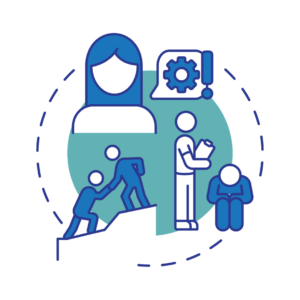
Failure is a normal part of life.
As adults we have the advantage of learning over the years that failing at something is different from failing as a person. To a teen, the mere thought of failure can illicit feelings of embarrassment, hurt, anger and disappointment. They do not know what we do, that challenging times can be a benefit in the long run. Adults are in a great position to not only normalize struggles and setbacks, but model how to address them successfully. Let your kids see you struggle, but also, how you navigate disappointment and challenges. Engage in conversations with them on how failure made you better, or how it was useful.
Failure helps us learn.
Failure can be an incredible teacher. We learn from our mistakes, and as a result, we become problem solvers, learn new knowledge, gain valuable experiences, create relationships, and build resiliency. While our instincts might suggest we rush in and rescue our kids from mistakes or gloss over them when they occur, it is far better to let them produce their own workable solutions. By allowing for this, they can develop skills necessary to navigate life, while still under your guidance. Let them initiate a conversation with their coaches, teachers, or friends when problems arise. Allow them to work through big feelings. The experience they gain will benefit them throughout life and instill confidence in their ability to do so.
Failure can cheat us out of who we are meant to be. Do not let it.
Many are familiar with stories of people who experienced devastating failure but kept pushing forward. Michael Jordan was cut from his high school basketball team. J.K. Rowling’s novel, Harry Potter, was rejected 12 times.
The idea of failure can be scary but if we make it a point to avoid it at all costs, it can cheat us out of what could be or who we can become. Discuss with your kids what could happen if they fail, but also what could happen if they didn’t.
Failure is going to happen in life, but how we learn to look at it and navigate can make a lifelong difference in the experiences we have and who we become. Help kids normalize it, navigate it and become who they are meant to be.
 Written by: Susan Foley-Health Educator
Sources:
Hicks, Dr. Laymon. (2023) A Kids Book About Failyure. DK Children Books
Lahey, J. (2015) The Gift of Failure. Harper Books
Lythcott-Haims, J. (2016) How to Raise an Adult. St. Martin’s Griffin